

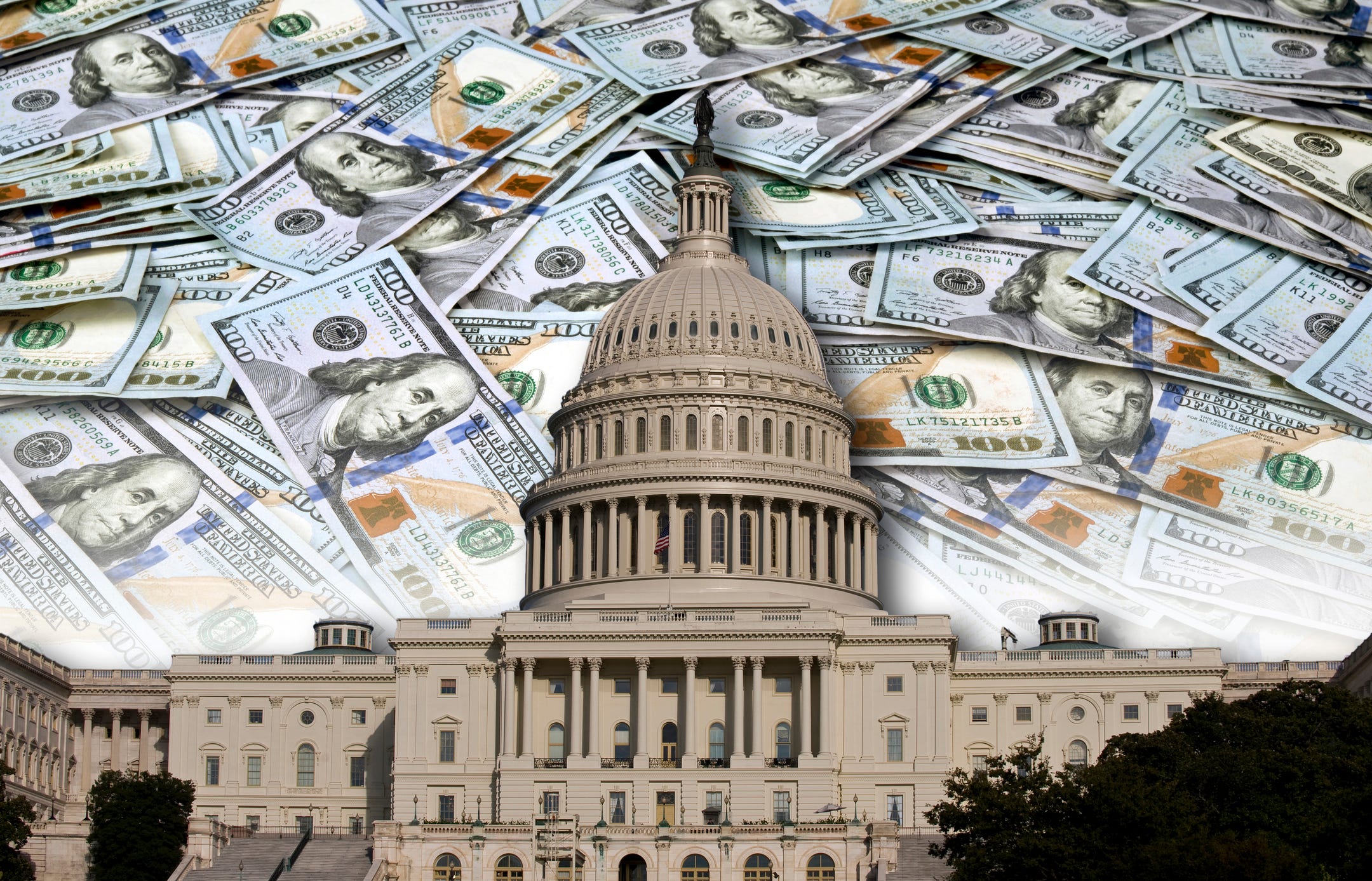
A New York Times report published Monday analyzed how America’s billionaire class increasingly controls U.S. elections through their outsized spending, a consequence of the Supreme Court’s 2010 Citizens United v. FEC decision.
From The Times:
The Times analysis found that 300 billionaires and their immediate family members donated more than $3 billion — 19 percent of all contributions — in federal elections in 2024, either directly or through political action committees.
Five presidential elections ago, before the Supreme Court’s 2010 ruling that lifted many remaining campaign finance restrictions, the share of billionaire spending was almost zero — 0.3 percent, to be precise.
The billionaire families gave an average total of $10 million each in 2024, an amount roughly equal to what 100,000 typical political donors gave, combined. And that does not count money that billionaires contributed through dark money groups that do not have to disclose their donors.
In one example of this spending, The Times reported that Sen. Tim Sheehy, a Montana Republican, received funding from 64 billionaires and 37 of their family members to defeat Democratic incumbent Jon Tester in 2024.
ICE and Border Patrol agents love Meta AI smart glasses
A number of Department of Homeland Security agents carrying out Donald Trump’s anti-immigrant operations across the U.S. have used Meta’s AI smart glasses to record members of the public.
In all, a report from The Independent identified Border Patrol and Immigration and Customs Enforcement agents in six states using the glasses, which feature a 12-megapixel camera, microphones, and a voice-activated virtual assistant that can help the wearer operate the camera hands-free and identify and analyze what they are looking at.
The extent to which DHS is using the glasses remains unclear. The agency said it does not have a procurement contract with Meta for the glasses, and DHS officials are also not allowed to use personal devices to make recordings in the field. “The use of personal recording devices is not authorized. Recordings may only be done on government issued devices such as Go Pros or traditional DSLR handheld cameras,” an agency spokesperson told The Independent.
Still, agents have been spotted using the glasses to record video and capture photos of journalists and observers. Those recordings could presumably be used alongside facial recognition software. U.S. immigration agents have built a track record of weaponizing personally identifiable information to intimidate observers and protestors. Trump administration officials, meanwhile, have repeatedly described citizens who videotape DHS officers as violent criminals and threats to national security.
This Week in Zuck:
Democratic lawmakers have opened a probe to track down the millions of dollars that private companies, including Meta, donated to the Donald J. Trump Presidential Library Fund. The fund was shut down by state authorities in Florida last September for failing to file a required yearly report, and it is unclear what happened to the money. Meta agreed last year to give $22 million to the fund to settle a dubious lawsuit brought by the president. (Daily Beast)
Meta has acquired Moltbook, a social-networking platform for AI “agents,” digital bots designed to complete tasks for humans. “The Moltbook team joining [Meta Superintelligence Labs] opens up new ways for AI agents to work for people and businesses,” stated a Meta spokesperson. (TechCrunch)
Despite recent efforts by Zuckerberg to ingratiate himself with conservative Americans, he was loudly booed by attendees of an Ultimate Fighting Championship (UFC) bout in Las Vegas on Saturday. Zuckerberg, a mixed martial arts hobbyist, appeared surprised by the reaction. UFC has one of the more right-wing fanbases in American sports, which appeared to play a role in Zuckerberg’s decision to appoint UFC CEO Dana White to Meta’s board during his recent conservative charm offensive. (Futurism)
An investigation by The Guardian found that Meta’s chatbot would help U.K. gamblers access illegal online casinos and bypass “source of wealth” checks, a measure designed to prevent gamblers from betting more than they can afford. (The Guardian)
DOGE employee stole — and sought to monetize — Americans’ Social Security data, per whistleblower
A former member of the White House’s Department of Government Efficiency (DOGE) project saved copies of sensitive databases maintained by the Social Security Administration (SSA), according to a whistleblower complaint reviewed by The Washington Post. The complaint is being investigated by Democratic members of Congress and reviewed by SSA’s inspector general. The unnamed person of interest is a software engineer who worked for SSA last year on behalf of DOGE, the initiative founded and initially led by Elon Musk.
After leaving DOGE to work for a federal contractor, the engineer allegedly told coworkers in October that he “possessed two tightly restricted databases of U.S. citizens’ information” and intended to transfer them to his new company’s digital repositories. Those SSA databases are known as “Numident” and the “Master Death File.” They contain personally identifiable information — including Social Security numbers, citizenship records, and racial and ethnic backgrounds — on hundreds of millions of living and dead Americans. The engineer also boasted that he had maintained “God-level” access to SSA systems, per the complaint.
A spokesperson for SSA denied the whistleblower’s claims, telling NPR, “The allegations by a singular anonymous source have been strongly refuted by all named parties — SSA, the former employee, and the company.” The Trump administration restructured SSA in 2025, forcing out longtime civil servants who opposed the agency’s unsafe and legally dubious data-sharing agreements with DOGE and the Department of Homeland Security. Frank Bisignano, an ultra-wealthy Trump donor, is currently leading SSA.
Mississippi says Musk’s xAI can operate dozens of polluting turbines
The Mississippi Department of Environmental Quality (MDEQ) issued a permit on Tuesday allowing Elon Musk’s xAI to operate dozens of methane gas turbines in Southaven, Mississippi. The 41 turbines, which are running just across the state boundary from xAI’s data centers in Memphis, Tennessee, are known to release smog-forming pollutants and formaldehyde. The predominantly Black communities that live in the area where South Memphis meets North Mississippi already face staggeringly high rates of respiratory ailments that stem from industrial air pollutants.
“The state’s relationship with xAI exposes exactly who MDEQ and the State truly serve,” said NAACP climate director Abre’ Conner. “This is why our fight to hold polluters and billionaires accountable is inseparable from the battle to stop dirty data.”
Prior to receiving the permit from Mississippi, xAI was operating at least 27 unpermitted turbines “in violation of the Clean Air Act,” according to the Southern Environmental Law Center, which is working with the NAACP to fight data center pollution.
This Week in Musk:
Musk’s attorneys have requested a mistrial in the Twitter securities fraud case on the grounds that the opposing counsel and presiding judge have compromised his right to a fair trial. The motion implies that too many people dislike Musk for the case to be adjudicated impartially, noting that “the animosity in the community toward Mr. Musk [was] apparent during jury selection.” (San Francisco Chronicle)
X, the social media platform owned by Musk, introduced a new feature that lets users activate a setting on photos that they post to prevent Grok “from modifying this content.” The feature appears to be a response to the widespread harassment campaigns in which users successfully asked Grok, X’s integrated AI model, to edit photos — often of real women — to make them appear fully or partially nude. Musk, meanwhile, is once again selling his AI as a source of explicit content. “If it’s allowed in an R-rated movie, it’s allowed in @Grok imagine,” he wrote in a Thursday post. (The Verge)
Last week, Grok was again the source of an international scandal. The chatbot generated posts mocking a Liverpool player who died last year and the scores of soccer fans who were killed in a fatal crowd crush in 1989. “AI services including chatbots that enable users to share content are regulated under the Online Safety Act and must prevent illegal content including hatred and abusive material on their services,” said a U.K. government spokesperson, who described the posts as “sickening and irresponsible.” (The Athletic)
xAI failed in its effort to obtain a preliminary injunction that would have prevented California from enforcing a law mandating that AI developers disclose the data and information their models are trained on. AI companies have repeatedly faced intellectual property lawsuits for feeding their models human-made material without proper consent. (ArsTechnica)
SpaceX, Musk’s rocket and satellite company, is reportedly inclined to list its shares on the NASDAQ for its planned initial public offering that could exceed $1.7 trillion. (Reuters)
NASA’s Office of Inspector General issued a report casting doubt on SpaceX’s ability to meet its 2028 deadline for returning American astronauts to the Moon as part of the Artemis III mission. “NASA is tracking a top risk that some of the cryogenic technologies and capabilities SpaceX is developing will not be adequately mature” before the scheduled lunar mission, the report stated. (NASA)
Amazon’s AI trouble
Amazon shoppers were unable to access its website and app for six hours last week due to what the company described as a bad “software code deployment.” Another recent error, largely caused by Amazon’s AI tool Q, resulted in 120,000 lost orders after customers were shown erroneous delivery times for items in their online shopping carts.
Internally, the company has said a contributing factor to its “trend” of outages is the “novel” usage of generative AI, according to The Financial Times. A note from a mandatory company meeting stated that the “best practices and safeguards are not yet fully established” for the use of AI by its engineers, even as Amazon continues to rely on the unproven technology.
The store outage last week came in the aftermath of two incidents in which Amazon Web Services, the cloud platform that a considerable portion of the internet and modern commerce relies on, went down following destructive and unexpected changes made by Amazon’s AI coding bot.
This Week in Bezos:
Amazon is seeking to borrow nearly $50 billion through bond sales as it looks to invest $200 billion in AI data centers and chips. (Bloomberg)
The Jeff Bezos-owned Washington Post published a column last week condemning Sen. Bernie Sanders’ bill to impose an annual 5% wealth tax on billionaires. “The stunning view from a luxury resort won’t do American cancer patients much good, and you can’t easily turn Mark Zuckerberg’s new $170 million mansion into health care,” argued Post columnist Megan McArdle. (Washington Post)
Bezos was scheduled to meet with The Post’s editors and some of its reporters on Thursday. The paper is in the process of evaluating its future after Bezos laid off hundreds of journalists last month. (The Wrap)
Federal Communications Commission Chairman Brendan Carr, an Elon Musk ally, upbraided Amazon for opposing SpaceX’s plan to deploy 1 million low Earth orbit satellites. “Amazon should focus on the fact that it will fall roughly 1,000 satellites short of meeting its upcoming deployment milestone, rather than spending their time and resources filing petitions against companies that are putting thousands of satellites in orbit,” Carr wrote on X. Amazon’s Leo satellite internet subsidiary is attempting to compete with SpaceX’s Starlink but has made little progress. (CNBC)
Oligarch Roundup
Family of victim killed in Canada school shooting sues OpenAI. Lawyers for the family filed a civil lawsuit on Monday alleging that OpenAI had “specific knowledge” of the atrocity, as the shooter used ChatGPT to discuss and plan “a mass casualty event.” Canada’s AI minister previously chastised OpenAI for its “failure” to report the killer to authorities. (Associated Press)
Top OpenAI employee resigns over firm’s deal with Pentagon. “AI has an important role in national security,” wrote Caitlin Kalinowski, OpenAI’s former head of hardware and robotics. “But surveillance of Americans without judicial oversight and lethal autonomy without human authorization are lines that deserved more deliberation than they got.” OpenAI struck a deal with the Pentagon last week to use its models for any actions the military deems lawful. (CNBC)
Larry Ellison claims Oracle will be safe from AI adoption. Ellison, chairman of the software and cloud computing giant, said on a Tuesday earnings call that his firm will survive AI’s impact on software-as-a-service (SaaS) companies. “We have these coding tools now that allow us to build a comprehensive set of software, agent-based software, to implement to automate a complete ecosystem like healthcare or financial services,” he said. “That’s what we’re doing at Oracle. That’s why we think we’re a disruptor. That’s why we think the SaaSpocalypse applies to others but not to us.” Oracle reportedly plans to lay off thousands of employees this month in departments that it believes can be partially run by AI. (Business Insider)
David Ellison promises editorial independence for CNN. “Editorial independence will absolutely be maintained,” Ellison, son of centibillionaire Larry Ellison, said during an appearance on CNBC. “It’s maintained at CBS, it’ll be maintained at CNN.” Under the Trump-allied Ellisons, CBS News has been deferential to the White House. Numerous journalists have also left the network, citing a lack of journalistic integrity under its new leadership. (CNBC)
“Maintained at CBS and maintained at CNN.” No, editorial independence isn’t and won’t be.
This is disgusting and undemocratic.