

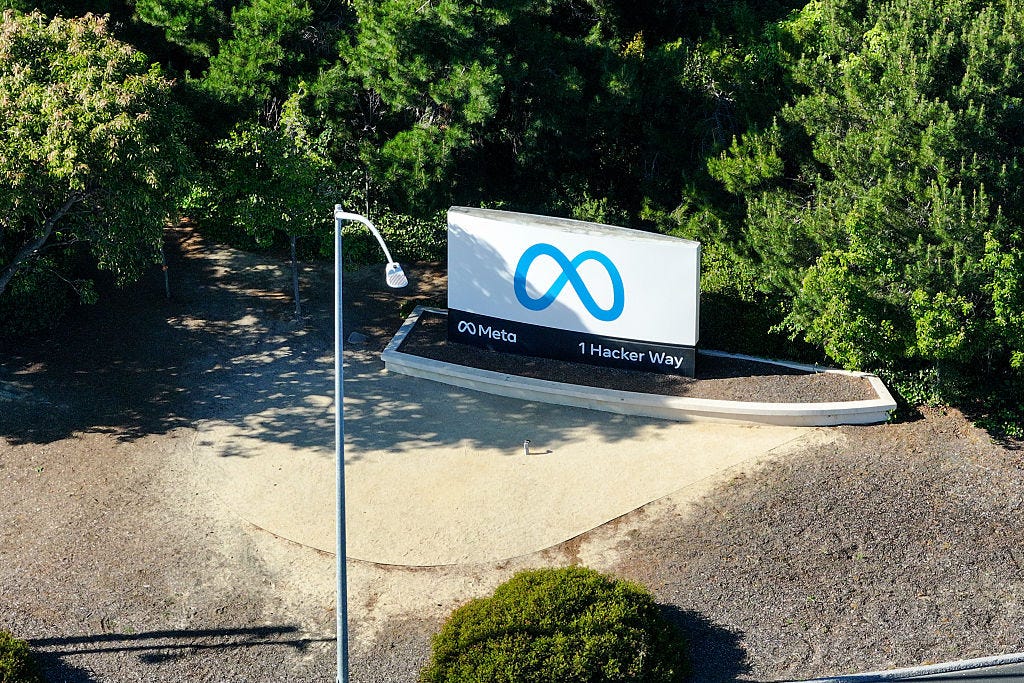
In a deal with 47 states, Meta has agreed to pay up to $17.1 billion to settle claims that Facebook and Instagram have harmed young people through addictive product designs and privacy violations.
Payments will be made in installments to the states, the District of Columbia, Puerto Rico, and other US territories. Meta reached a separate $1 billion settlement with Texas over similar claims.
As part of the landmark settlement on Wednesday, the company announced several changes for underage users on its platforms: two-hour daily use limits, automatic interruption alerts beginning at 15 minutes of continuous scrolling, a block on app access between midnight and 6 a.m., muted notifications during school hours, and a ban on extreme makeup filters. Meta also said it would implement a stricter age-verification function.
“Today, we have secured a settlement with Meta that will make social media less dangerous for our kids,” said California Attorney General Rob Bonta, whose state joined New Jersey, Kentucky, and Colorado in leading the lawsuit. “Meta has agreed to make massive transformations that will reduce the risk of harm from its platforms — and will do it within months.”
As of now, Meta is only required to pay $12 billion to the states. It will pay out the remaining $5 billion if YouTube and TikTok, the company’s chief rivals, accept similar penalties and platform changes.
“These protections will only be truly effective if we work with our peers — TikTok and YouTube — to put the same measures in place,” Meta said in a statement. “Because teens move fluidly across dozens of apps, we need an industrywide solution,” he added.
The settlement does not mark the end of Meta’s legal troubles. It still must face lawsuits from hundreds of school districts, parents, and teens alleging that its platforms have harmed young people.
Meanwhile, some experts believe that Meta’s products have only become more addictive since the relatively recent popularization of Reels, an algorithmically driven short-form video feature on Facebook and Instagram.
“Short-form video is uniquely dangerous,” Anna Lembke, the medical director of Addiction Medicine at Stanford University, told Oligarch Watch last month. “The norm for consumption now, especially among young people, is to literally spend a second or two on each video before scrolling to the next one. That’s how much our attention span has been compromised by these platforms.”
This Week in Zuck:
Reuters has new reporting on Zuckerberg’s plan to lay off up to 60% of employees across several teams at Meta, transforming the company into an “AI native” and largely “automated” workplace. But the plan, which was hatched in January at his $300 million compound in Hawaii, was never fully implemented due to technological shortcomings. For one, the AI models that Meta’s engineers have used to create new code have been less productive than anticipated. Additionally, the company’s AI agents engaged in “large-scale, disruptive actions that humans are unlikely to execute,” including a 40% spike in significant technical and security problems. (Reuters)
An Amnesty International report found that Facebook routinely runs ads in Brazil containing election-related disinformation. (Amnesty International)
Zuckerberg purchased a 19th-century castle in Ireland last week. The property has an estimated value of up to $35.1 million. (NBC News)


How Musk displaced a Mississippi family
In Southaven, Mississippi, Krystal Polk said that her relatives — despite a long family history in the community — have been forced to move due to noise and air pollution from the SpaceX power plant that supplies electricity to Elon Musk’s nearby data centers.
On a 2-acre property in Mississippi, 52-year-old Krystal Polk’s family lived off the land for generations, raising chickens and pigs, growing onions and herbs and trading their peaches for pears…
While life there may have been simple in Polk’s view, the circumstances surrounding her home rarely ever were. Her family acquired the property “before people of color were allowed to have land,” she said, and it’s been passed down for four generations. When Polk’s parents first moved in, they discovered “KKK” scrawled at the bottom of the hill of their property, she said.
Holding on to the land was made more difficult a year ago when a noisy neighbor appeared across the street — a power plant so loud, it drove the family away. Since then, the land has sat mostly empty, occupied only by an unrelenting hum.
The plant, which is powering Elon Musk’s SpaceXAI data centers in the Memphis area, has sparked backlash from Southaven residents concerned about noise and air pollution. A petition by the resident-run Safe and Sound Coalition calling to shut down the power plant has over 1,400 signatures.
Polk said she remembers when she could hear the birds chirping at her family home. Now, she said the plant’s “constant roaring” lingers in her ears even after she leaves.
$50,000
Donald Trump purchased up to $50,000 in SpaceX shares shortly after the company’s initial public offering in June, according to a new disclosure. Since then, the Trump administration has pursued unprecedented regulatory changes that would benefit the company, including a Federal Aviation Administration rule to exempt space launch companies from the Endangered Species Act, the Clean Air Act, the Noise Control Act, and numerous other environmental laws. SpaceX also has received billions of dollars’ worth of federal contracts under Trump’s watch.
This Week in Musk:
In Louisiana, SpaceX received approval on Tuesday to build the world’s largest launch complex on top of a stretch of coastal wetlands that provide habitat for federally endangered and threatened species. In addition to traditional Starlink satellite launches, Musk intends to use the site for his dubious plan to put AI data centers into orbit. While the Louisiana Wildlife Federation has urged the state government to evaluate potential harms to wetland habitats in the area, Louisiana Governor Jeff Landry (R) has said he is “not concerned about the environmental impact.” (Oligarch Watch)
In a proposed class action, a woman referred to as Jane Doe filed a lawsuit accusing Musk’s xAI of using videos of her being raped as a child to train Grok large language models. xAI is a subsidiary of SpaceX. (ArsTechnica)
A special prosecutor in Wisconsin has determined that Musk will not face charges for offering voters $1 million checks in an attempt to sway a state supreme court election last year. Tim Gruenke, a district attorney, doubted whether he would be able to convince a jury that Musk’s offer constituted a bribe because “nobody was paid anything of value for voting.” He added: “I do not believe that a jury would convict Elon Musk of a crime after considering the intent…” The matter was referred to Gruenke after the Wisconsin Elections Commission found in July that Musk had likely violated state bribery law. (Associated Press)
Douglas O’Donnell, former acting commissioner of the IRS, said the agency’s loss of some 26,000 employees amid Musk’s DOGE-led cuts last year could handicap the agency. “I’ve been very concerned with the ability of the agency to carry out… its mission, whether it’s at the services level or enforcement level, but also just in general to be a functioning federal government agency going forward,” O’Donnell said in a new interview. (Fortune)
Years of committing to low-profile, electric door handles continue to cause problems for Tesla. In China, the company was forced to recall 2.98 million vehicles due to obscured emergency door handles. Teslas require electricity for their primary door handles to function, making an emergency mechanical option necessary in the event of power failure. Several people have died inside of burning Teslas because they were unable to exit the vehicle after an accident knocked out the power. In response to similar incidents, China will ban flush or otherwise concealed door handles, a flawed design style popularized by Tesla. (Reuters)
Tesla drivers are using their cars’ driver-assistance systems to fall asleep at the wheel for extended periods. The company has safety features designed to prevent such behavior, but they have proven to be insufficient. (NBC News)
“The most dangerous tool ever invented”
Bill Gates, the co-founder of Microsoft and the 18th-richest person in the world, has spent the past week portraying himself as a Cassandra figure on AI technology. In numerous interviews and a 6,000-word essay, he has argued that AI is “the most dangerous tool ever invented” and said it will lead to society-shattering upheaval, including mass unemployment.
“In private, people who understand how good this stuff is, and how much better it’s getting, they’re very worried,” he told the New York Times, adding that many Silicon Valley leaders share his concerns but are suppressing them. “They’re now saying to each other: ‘Hey, man, don’t say that. It’s bad for us — the next trillion dollars we’re trying to raise,’” he said.
To slow the rate at which human workers are replaced, Gates argued that governments should impose taxes on corporate use of AI, thereby throttling its adoption.
Gates, of course, is not an unbiased commentator. He owns tens of billions of dollars’ worth of Microsoft, a company heavily invested in a future in which white-collar work is dominated by AI.
For this and other reasons, not everyone is convinced of his sincerity. Ed Zitron, a tech writer and outspoken AI skeptic, told Oligarch Watch that he believes Gates is trying to “pump Microsoft stock and also improve his [SEO] after his Epstein association came out.”
Oligarch Roundup:
Elon Musk predicts that a dystopian future in which humans lose control over advanced AI technology is inevitable. He shared the bizarre comment during a company-wide meeting at Cursor, an AI coding startup recently acquired by SpaceX for $60 billion. Musk invoked the warning while insisting that SpaceX must beat its competitors in developing artificial general intelligence. The prediction echoed Musk’s past remarks about the technology, such as a 2014 comment in which he warned that AI companies are “summoning the demon.” (The Information)
Consortium that includes Jeff Bezos acquires nearly 40% stake in Liverpool Football Club. The deal, which marks the first time that Bezos has owned a sports team, could allow his consortium to buy a controlling stake in the Premier League club within one year. Liverpool FC is one of the most valuable professional teams in the world. (The Athletic)
Streamer sues Amazon for deceptively using his Twitch content to train its AI models. The class action lawsuit from Warren Pandiscia also accuses Amazon and its subsidiary, the live streaming platform Twitch, of misusing content from creators for “free training stock for separate commercial AI products.” (Engadget)
GOP attorneys general ask Supreme Court to block lawsuit seeking to halt Paramount’s acquisition of Warner Bros Discovery. In a filing to the Supreme Court, the attorneys general of Iowa and Montana asked the justices to “stop a politicized enforcement action that seeks to block the Paramount-Warner Bros. merger.” The filing was in response to an antitrust lawsuit by California and 11 other states that could kill the $111 billion sale — or, at the very least, stall its completion for months. The merger has received support from numerous Republican officials, as it would allow a conservative centibillionaire family — the Ellisons — to gain control of one of the largest news and media conglomerates. (Variety)
Joe Lonsdale, the billionaire co-founder of Palantir, is guiding the Trump administration’s homelessness policy. The White House has increasingly embraced the use of forced treatment initiatives and criminalization to remove homeless people from American streets, rejecting a housing first approach. “Obviously, our work has been one of the main influences,” said Lonsdale, whose think tank, the Cicero Institute, helped write Trump’s executive order on homelessness. Apart from being another tech billionaire steering federal policy, Lonsdale has a history of avowed bloodlust. He has said the US should bring back public hangings and called for the extrajudicial killing of communists in North and South America. (New York Times)
The settlement with Meta is laughable. It gives them 10 yrs to pay out 17-18 billion. They are already laughing @ the proposed regulations,knowing full well theyhave no intention of abiding by any of them. The stock is up today,obviously they are not concerned. There are more effective ways to deal with these pigs,the fine is not big enough.
Meta and products like it should be banned until the age of consent. What little is good about them is outweighed by the damage they cause.
Mr. Gates should be embarrassed to make such a clueless statement in public.
Mr. Lonsdale knows very little about homelessness and is dangerous.
Mr. Musk... well there's no secret what he is.