

Elon Musk has suddenly returned to warning that climate change is a pressing existential threat.
It just so happens that his solution — while not endorsed by climate scientists — neatly aligns with his plan to make SpaceX more valuable “than the rest of Earth.”
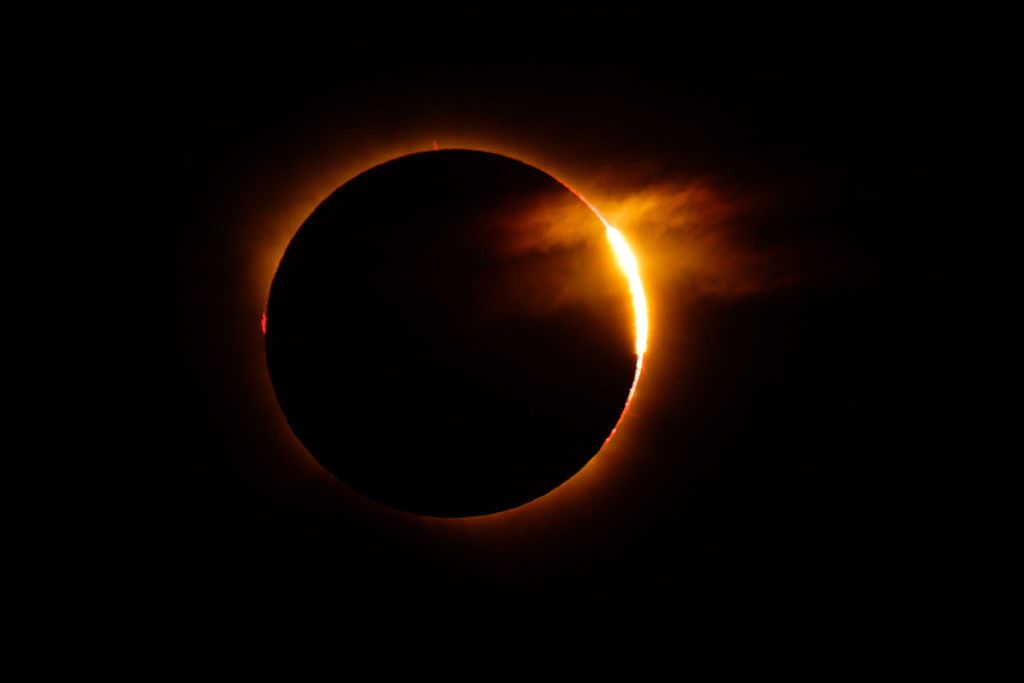
In a Sunday post on his social media platform, Musk declared that saving the planet’s climate will, “of course,” only ever be accomplished by deploying a swarm of “sentient satellites” to partially blot out the Sun.
“Space satellites to control temperature and massive geo-engineering will be needed or it will be game over,” he wrote after contending that a global transition to sustainable energy would not prevent the “severe extinction events” that decimate terrestrial life every 100 million years or so.
“But we do need to act much faster than that if people still want to live where the beach is today,” he added.


Conveniently, this would require humanity to rely on Musk to save the world from climate disaster. After all, his company, SpaceX, leads the world in launching rockets and satellites and is spending billions on a frantic effort to develop artificial general intelligence.
Musk’s plan would also involve using a mass driver, or an electromagnetic catapult, to launch satellites from the lunar surface toward a point between the Earth and the Sun. The satellites would presumably come out of the lunar factories that Musk claims SpaceX will someday build, along with the accompanying catapults.
There are a few problems, though. Humans have not set foot on the Moon in 53 years. And thanks in part to a series of development failures for Musk’s Starship rocket, humans might not return to the lunar surface for years to come.
SpaceX and the rest of the world are also nowhere near developing “sentient satellite” swarms that can deliver just the right amount of Sun-blotting or withstand geomagnetic storms and solar radiation. The company already struggles to keep its Starlink satellites from being destroyed by the Sun’s energy.
Nevertheless, with the planet already experiencing unprecedented droughts, heatwaves, storms, and glacier loss, Musk seems to believe that humanity can just sit back and wait for him to realize his science-fiction-esque panacea for the climate crisis.
“Makes Musk-sense”
In one of his Sunday posts, Musk predicted that humanity has “about 50 years or so to take action” to prevent a climate catastrophe. “Should be more than enough time for the space satellites to solve any heating problems,” he added.
Setting aside the ludicrously high technological and cost barriers, climate experts have for years denounced other forms of solar geoengineering, including those that have been researched much more closely. They have warned that using anthropogenic material to dim solar radiation could cause regional climate disruption, ozone depletion, and drastic alterations to precipitation patterns and plant life.
Citing these and other concerns, hundreds of scientists and academics have signed a letter urging the United Nations and governments worldwide “to prevent the normalization of solar geoengineering as a climate policy option.”
“Several scientists have launched research projects on solar geoengineering, and some see it as a potential future policy option,” the letter states. “To us, these proliferating calls for solar geoengineering research and development are cause for alarm… [The risks] are poorly understood and can never be fully known.” (Musk’s satellite idea is so speculative that it isn’t even being considered by scientists who are open to other forms of solar geoengineering, such as using lunar dust, sunshades, or reflective atmospheric aerosols.)
Another worry is that pursuing dubious solar geoengineering projects would grant countries and corporations a license to continue increasing CO2 emissions. After all, if humans can turn down the Sun, why bother pursuing the adoption of renewable energy?
For Musk, downplaying the urgency of decarbonization might help explain his interest in the theory.
While he spent years using climate change to sell electric vehicles, his companies are now planning to exponentially increase their emissions by burning natural gas to power AI data centers and factories and launching thousands of rockets every year.
The latter piece of that vision has put Musk — a one-time climate crusader — at odds with scientists and activists who are concerned that thousands of additional rocket launches could weaken the Earth’s atmosphere and limit its ability to absorb harmful solar radiation.
“Contributing to global warming in order to build strategies for global un-warming,” Francesca Albanese, a human rights scholar at the United Nations, wrote in response to Musk’s solar geoengineering plan. “Makes Musk-sense. No doubt.”
“The world is under massive attack due to climate change & you couldn’t care less”
Since the 2010s, Musk’s thinking on climate change has undergone a few evolutions, shifting with his business goals.
Before his post-pandemic political transformation, he had spent years discussing climate change as humanity’s gravest crisis.
“You know nothing & are worthy of contempt,” Musk scolded one Twitter user in 2018 after they questioned the significance of Tesla, his electric vehicle company. “The world is under massive attack due to climate change & you couldn’t care less.”
That same year, he proclaimed that Tesla “exists to help reduce risk of catastrophic climate change,” adding, “Even if your faith in humanity is faltering, this is worth caring about. Support makes a difference.”
Around the same time, as Tesla emerged as the dominant eco-friendly automaker, he repeatedly lobbied governments to pursue more aggressive carbon taxes. Tesla has since netted billions in profits selling carbon credits to rival automakers penalized by US and EU regulators for failing to manufacture enough emission-free vehicles.
But as Musk adopted increasingly conservative political views during the Biden era, he became a climate-change skeptic, wary of “extreme environmentalists.”
In 2024, during a pre-election livestream with Donald Trump, Musk said there was no “need to rush” to sustainable energy, that humanity could spend another “50 or 100 years” burning fossil fuels without issue.
“I don’t think we should vilify the oil and gas industry and the people that… provide the necessary energy to support the economy,” he added.
It was an about-face for Musk. He had spent years vilifying the oil and gas industry, accusing its lobbyists of swindling the public with their dangerous “propaganda.” He even pilloried perceived Tesla critics as “puppets of big oil.”
The timing of his then newfound reverence for the industry could be read as opportunistic: it surfaced a few weeks after Musk first opened a highly polluting gas power plant to run his AI data center in Tennessee.
Since then, he has purchased a $1 billion gas turbine company, opened another gas power plant in Mississippi, and retreated from the renewable energy sector by discontinuing Tesla’s Solar Roof product. Musk also plans to build a massive gas plant in Texas to power what would be the world’s largest factory.
Wouldn’t replacing fossil fuels with green energy be easier and cheaper?
What a nut job