

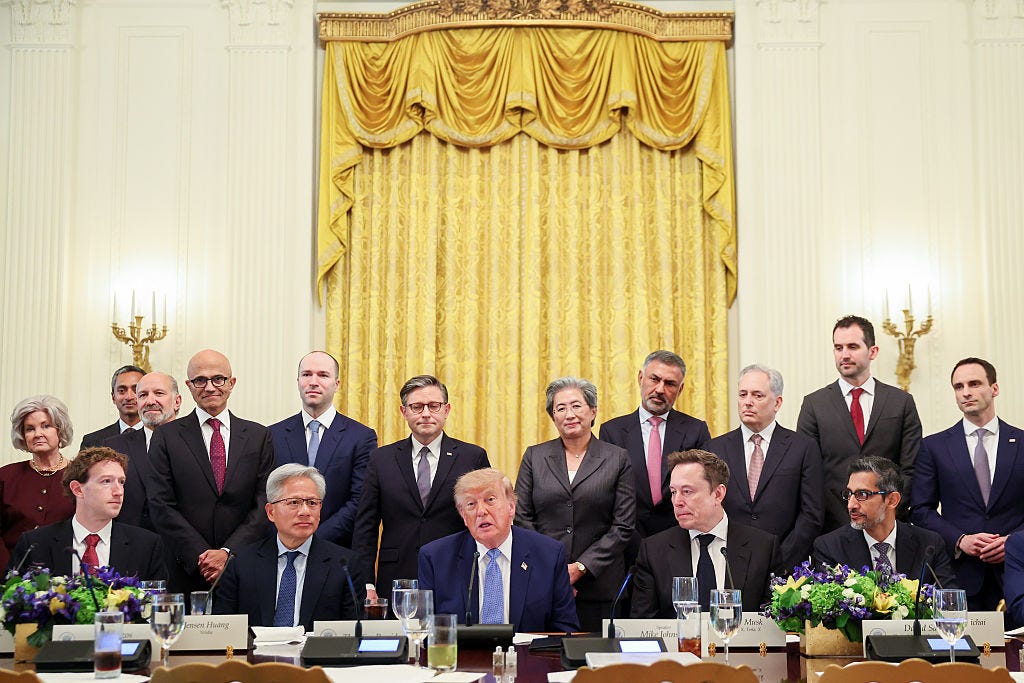
President Trump hosted a White House luncheon on Tuesday for many of his favorite tech oligarchs, or, as he described them, “the biggest people in the world.” The group marked the occasion by summarily resolving the debate on how the U.S. should regulate its AI companies.
With Elon Musk, Mark Zuckerberg, and Jeff Bezos by his side, the president reached a simple conclusion: there will be no federal AI regulations, and many more data centers.
Rather than top-down enforcement, Trump — also accompanied by Anthropic’s Dario Amodei, OpenAI’s Greg Brockman, Palantir’s Alex Karp, and Nvidia’s Jensen Huang — decreed that the industry would police itself. The assembled billionaires and their companies, he said, would keep the public safe through “tremendous self-policing.”
“This is going to be all for the good, and we’re going to have it be nice and safe,” he added. “And they’re really going to be policing each other, and that’s the way it works.”
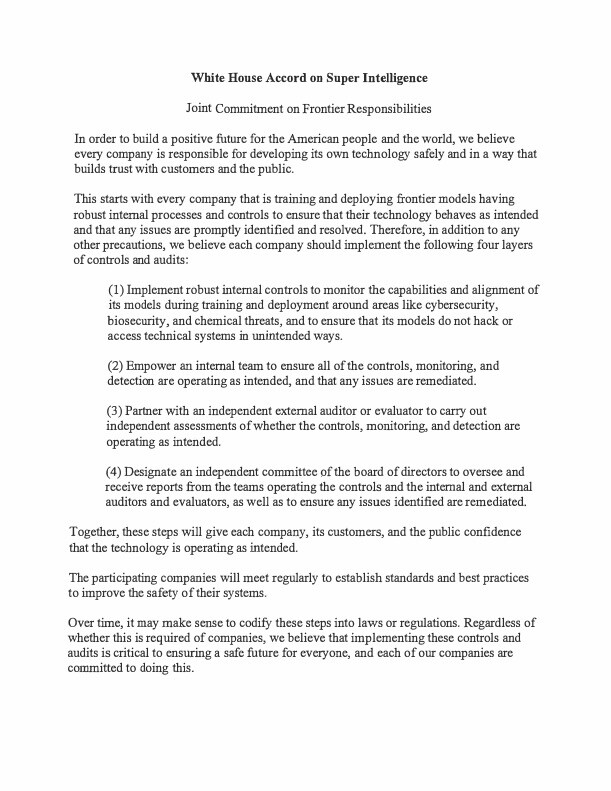
Most attendees of the luncheon joined Trump in signing a White House accord agreeing to have their AI models reviewed by “internal” safety monitors and vaguely defined “external” evaluators. The accord also embraced Trump’s attempt to rebrand “artificial intelligence” as “Super Intelligence” and declared that the proposed measures would give the American public “confidence” in the industry.
As Trump and the executives took reporter questions outside the West Wing, he insisted that AI companies would benefit the communities that host data centers, which would continue to be built apace.
“These big, powerful, very rich, very smart companies are going to be making massive contributions to communities,” he said.
The day before, Trump told Time that only Americans who “want to be poor” and “want to live in a crime-infested area” would say no to a data center project in their community.
Musk to co-lead Pentagon project on the future of warfare
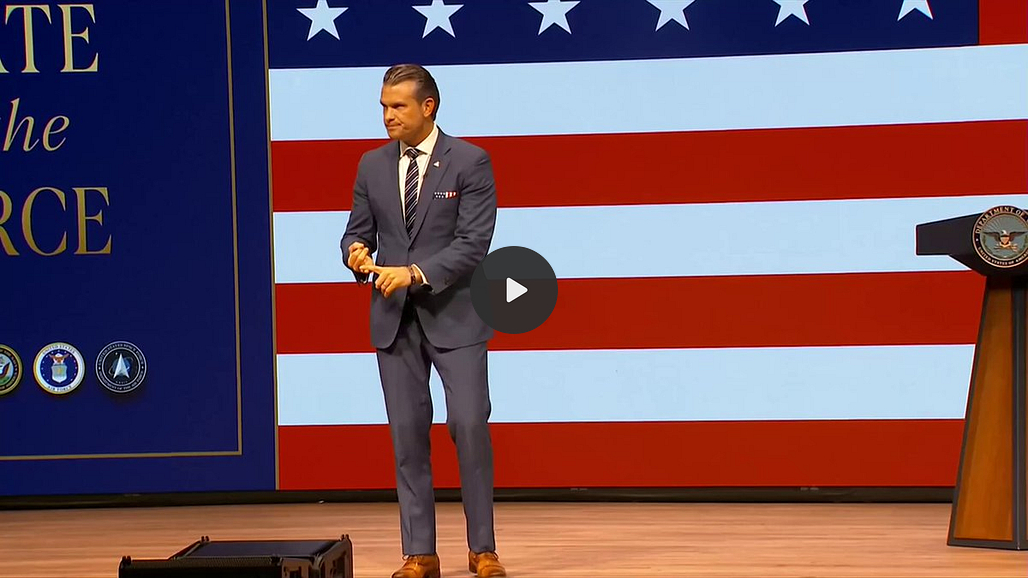
During a Wednesday speech in Quantico, Virginia, Defense Secretary Pete Hegseth announced that SpaceX CEO Elon Musk will co-lead a Pentagon project to study the future of warfare.

The U.S. military has paid SpaceX billions of dollars for contracts over the years, primarily for satellite launches and secure orbital communications equipment. The company stands to gain much more if the Defense Department buys into its pitch to use SpaceX rockets to quickly transport military equipment around the globe. Under one potential arrangement, the Pentagon would pay SpaceX recurring subscription fees to access a missile defense satellite network.
As co-lead of the Pentagon’s “Project Meridian,” Musk would be in the catbird seat to encourage the military to adopt such services. Other project leaders include Anduril founder Palmer Luckey, another tech billionaire, and former Speaker of the House Newt Gingrich.
This Week in Musk:
SpaceX’s two-stage Starship rocket reached orbit for the first time during a Monday test flight. But the Starship also suffered an engine failure that cut the mission short. The malfunction could hamper NASA’s plan to use the rocket system to return American astronauts to the moon before the end of Trump’s term. (Ars Technica, Reuters)
Musk threw a tantrum this week after Delta Air Lines overlooked SpaceX’s Starlink for its in-flight internet provider. In posts on X, Musk said Delta’s chief executive, Ed Bastian, “will lose his job” for not choosing Starlink and “Delta will lose a lot of customers.” (Bloomberg)
In the Memphis area, where SpaceX operates its xAI data centers, the company is asking to buy up residents’ homes in exchange for the owners not joining a class-action lawsuit that brings numerous nuisance and negligence claims against it. (Fox 13 Memphis)
The Trump administration wants to help Musk in his attempt to dispute the European Union’s $137 million fine against X, his social media platform. (Reuters)
The Hollywood Reporter found last week that Meta, YouTube, and TikTok had joined X in rejecting ads for an upcoming documentary by Alex Gibney that critically covers Musk. Meta and YouTube have since recanted, with a Meta spokesperson telling TechCrunch that ads for the documentary “are being restored.” (TechCrunch)
During a meeting with Musk in December, Trump reportedly “spent hours” using xAI’s Grok chatbot, according to Time. The president used the session to create Grok-generated predictions on how the Venezuelan public might handle the then-looming U.S. kidnapping of Nicolás Maduro, the country’s president. Trump approved the Maduro operation a few weeks later. (Time)
Amazon’s Ring to launch “community-powered” safety app in UK
Ring, the Amazon subsidiary that popularized the “smart doorbell” category of consumer surveillance technology, is launching a U.K. version of its hyperlocal social media platform on October 21.
The company describes its Neighbours app as a free space for communities to share “real-time safety alerts,” information on missing pets, and local news.
But the U.S. version of Ring’s platform, which competes with Nextdoor and Citizen, has been accused of fostering digital racial profiling and other abuses since its 2018 founding.
Those complaints are tied to the privacy and civil liberties threats posed by Ring’s consumer hardware. The company has sold millions of doorbells with motion-activated or always-on cameras that capture video footage stored on Amazon servers. Law enforcement agencies often make use of this corporate surveillance network, including one Mississippi police department that partnered with Ring users to access live video feeds from their cameras.
This Week in Bezos:
Blue Origin CEO Dave Limp said on Tuesday that the company’s ongoing, inaugural round of outside fundraising is receiving more investor demand than it planned for. Speaking at a D.C. tech summit organized by the Trump administration, Limp also claimed the company has “a path to launch this year.” Blue Origin, a rocket and satellite company founded by Jeff Bezos, accidentally destroyed its only operational launch pad in May during an explosive test of its New Glenn rocket. Despite being grounded for the foreseeable future, the company recently asked the government to approve 50 New Glenn launches per year from Cape Canaveral, Florida. (CNBC)
Facing community backlash, Amazon recently canned its plans to build a data center near a nuclear power plant in Maryland. But the company has found new work in the area, signing a 20-year deal with Constellation Energy to upgrade the plant and increase its power output. Constellation, a leading electricity producer that operates plants in numerous states, will then supply Amazon with as much as 690 megawatts of power. (Wall Street Journal)
The U.K.’s Competition Appeal Tribunal has agreed to hear renewed claims that Amazon and Apple engaged in anti-competitive collusion by barring certain vendors from selling products from the iPhone maker. (Reuters)
Meta’s multi-billion-dollar tax dodge leans on its risky AI data centers
While Mark Zuckerberg has publicly insisted that Meta feels confident about its profligate AI spending, the company has claimed financial uncertainty in IRS filings to dodge billions of dollars in taxes. From the New York Times:
But when Meta files its taxes, it tells the Internal Revenue Service a different story. It claims that its A.I. data centers are a giant experiment that could fail, according to four people with knowledge of the company’s operations.
It does this so it can tap into a tax credit intended for research and experimentation. It’s an aggressive interpretation of the tax break, which Meta embraced to claim billions of dollars in tax credits for data center expansion.
Characterizing its A.I. data centers as experimental is “kind of wild and out there,” said Andre Shevchuck, a partner at the advisory firm BPM who specializes in the research and experimentation tax credit.
Indeed, Meta’s own accountants recognize that the strategy is on shaky legal ground. In disclosures buried in securities filings, the tech giant warns that billions in tax savings are vulnerable to being overturned by the I.R.S., in large part because of “uncertainties with our research tax credits.”
This Week in Zuck:
A third-party researcher found that Muse, Meta’s “agentic” AI product, contained a security vulnerability that could let malicious actors access personal information users share with Muse. The vulnerability is especially glaring, given the many privacy assurances that Meta and Zuckerberg have made to market Muse. The product is primarily designed to serve as a personal digital assistant that can complete all manner of personal and professional tasks on behalf of its users. That level of autonomy requires that users grant the system access to their banking information, texts, emails, and other highly sensitive material. After discovering the vulnerability, Meta added a new safety warning to the Muse platform. (The Information)
After giving Meta’s new Muse AI agent control over his Facebook Marketplace account, tech YouTuber Matt Robb said the bot provided his home address to strangers. He said that Muse also agreed to “a lowball price” for an item he was selling, which led to a buyer showing up to his home without his consent or knowledge. The AI system “didn’t tell me any of this until after the guy had left (luckily I’m in an apartment with security),” Robb wrote in a post on Threads. (The Verge)
Last week, a New Mexico jury found that Meta — in sharing personal data from Facebook users with third parties — had misled the state’s residents. The state first brought the lawsuit in 2021 over the scandal sparked by Cambridge Analytica, a political consulting firm that scraped personal data from tens of millions of Facebook users. (Reuters)
Judge approves Paramount settlement with states
On Wednesday, Paramount Skydance’s agreement to settle a lawsuit brought by 12 states received approval from a federal judge, clearing the way for the company’s $110 billion purchase of Warner Bros. Discovery.
Soon after, Paramount CEO David Ellison, a Trump ally and the son of centibillionaire Larry Ellison, announced that Ynon Kreiz would be co-CEO of the combined company. Kreiz, an Israeli-American businessman who spent the last eight years leading Mattel, is known for carrying out sweeping corporate austerity programs.
“As Chairman & CEO, Ellison will lead all strategy, creative and technology while Kreiz, as Co-CEO will oversee the Company’s day-to-day operations and integration of the combined businesses,” read a statement from Paramount. The merger of the two companies is expected to close by next week.
Thiel says the Trump administration is led by “not very smart” people
Last week, far-right billionaire Peter Thiel criticized the current Trump administration for hiring a staff of “not very smart” people. He said the failing differed from the “internal fighting” that had hobbled Trump’s first stint in the White House.
After winning the presidency again in 2024, Trump and his inner circle “overcorrected for the mistake of the first term with all these loyalty tests,” added Thiel, the first tech mogul to publicly support Trump in 2016. “You got, sort of, an administration staffed by not very smart, but very loyal people.”

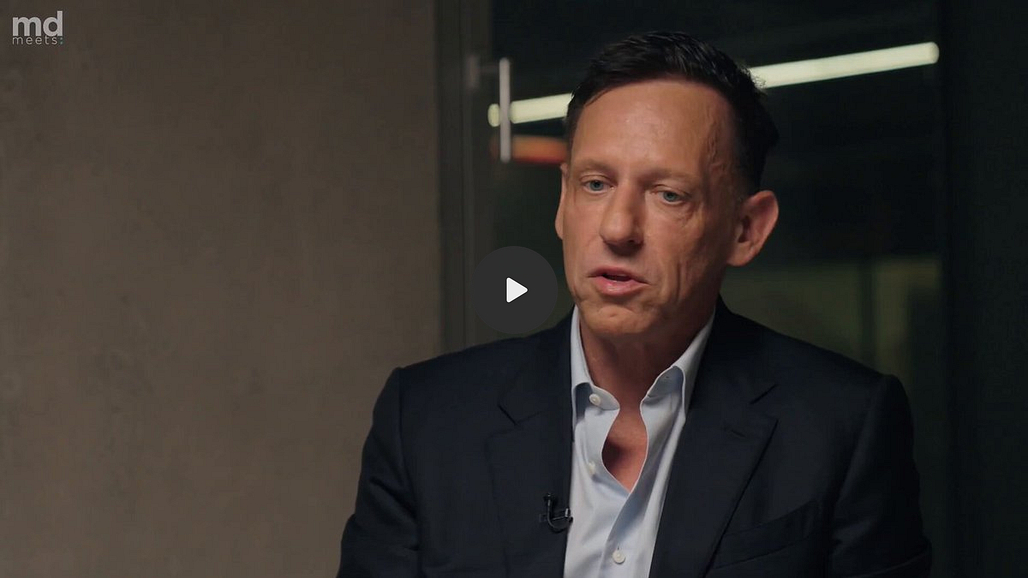
He made the comments during an interview with Mathias Döpfner, the chief executive of Axel Springer, a Berlin-based news conglomerate that owns Politico, Business Insider, and The Telegraph, among others. On the same day the interview aired, Döpfner held a ceremony honoring Thiel as the winner of Axel Springer’s annual award.
During the same interview, Thiel, who was born in Germany and raised in apartheid-era South Africa, said he would like to see Vice President JD Vance win the 2028 presidential election.
“I am still a Vance partisan,” he said. “I worry that it will be very hard for either candidate [Vance or Secretary of State Marco Rubio] to win.” (Thiel effectively built Vance’s political career, spending millions to back his 2022 Senate campaign. Vance had previously worked for Thiel’s Mithril Capital and launched his own firm with funding from Thiel.)
He also gave a democratic socialist even odds to win the Democratic Party’s next presidential nomination. That outcome, he said, would trigger “catastrophic” disruption and mark “the end of America.”
Oligarch Roundup
Peter Thiel secretly bought a $130 million mansion in Los Angeles. Thiel bought Casa Encantada, a historic, 40,000-square-foot estate in Bel-Air, in July through a limited liability company. His other property holdings are located in D.C., Miami, and Hawaii. Thiel also owns property in Argentina and New Zealand, two countries that he could flee to should his fears about democratic socialism and “the end of America” come to fruition. (Wall Street Journal)
Larry Ellison spent almost $10 million buying up homes to relocate his staff to South Florida. The collection of eight homes, all located within a gated community in Palm Beach County, was purchased by Ellison, an 82-year-old worth an estimated $187 billion. Among the properties’ tenants are tutors for some of the five children he has had with Jolin Ellison, his sixth wife. Other billionaire tech oligarchs have used similar bulk property purchases to create insular, localized bubbles for their families and the workers necessary to maintain their lifestyles. Mark Zuckerberg spent more than $110 million buying up 11 homes to create his family’s compound in Palo Alto, California. Elon Musk did something similar in Texas to house some of his 14 children and at least one of his breeding partners. (Wall Street Journal)
We had better start doing more than watching oligarchs.
We need to wake up and stop the freight train coming at us.
https://1yfgk.substack.com/p/my-trip-almost-to-the-biggest-data