

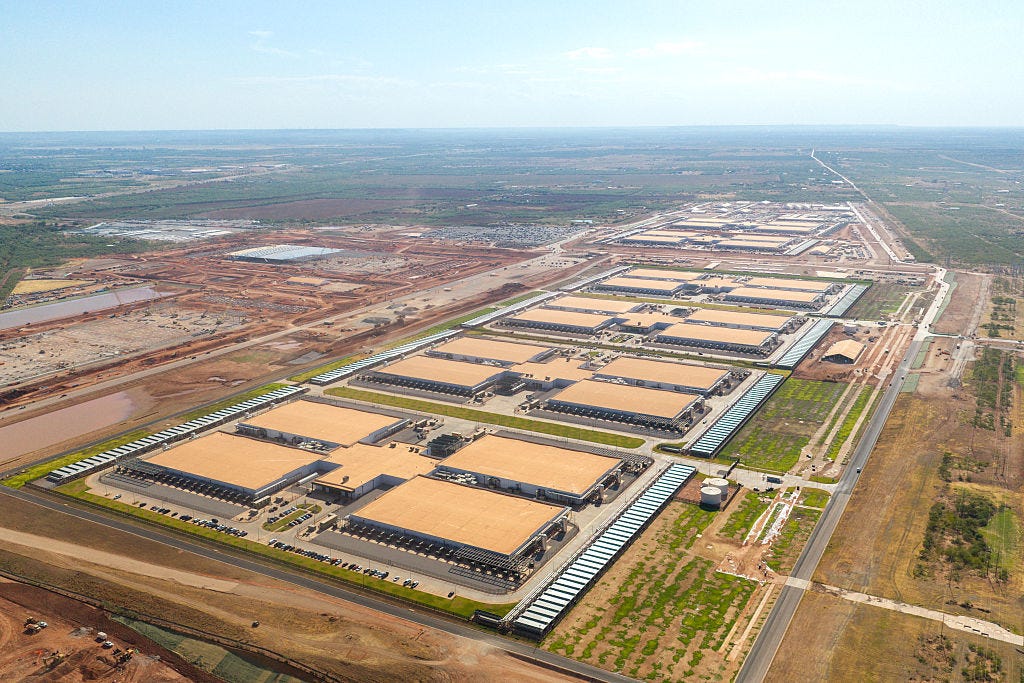
A nonprofit backed by tech oligarchs is spending tens of millions of dollars to convince voters to stop worrying and love data centers.
“Data centers are not evil,” read one social media post shared by Build American AI (BAAI), the political nonprofit. “They are job providers, service providers, and power the very technology that makes reading posts like this possible.”
With the data center construction boom now facing opposition from majorities of Republican and Democratic voters, several Silicon Valley elites have pumped money into a web of pro-AI groups looking to sway public opinion and elections during the upcoming midterms.
Along with BAAI, the network includes Leading the Future, a super PAC helping elect pro-AI lawmakers, and a pair of auxiliary super PACs — one to back Democrats and another to back Republicans.
The network has been one of the most well-funded political influence operations in the current election cycle. BAAI, a dark money group that does not have to report its donors, has said it has $50 million in cash reserves, according to NBC News. Separate regulatory filings show that Leading the Future has raked in $75.1 million since August of last year.
Among the network’s billionaire backers are OpenAI president Greg Brockman and his wife; Palantir cofounder Joe Lonsdale, an influential voice in Trumpworld; and venture capitalists Ben Horowitz and Marc Andreessen, the latter of whom once described AI workers as preferable to humans.
BAAI has focused its most recent ad blitz on Wisconsin, Kansas, and Ohio, three states where pushback against new data centers is surging in response to the AI industry’s furious construction pace.
Many of the group’s ads have urged Americans to sign a letter to Congress demanding a “comprehensive national AI plan” that includes “investment in grid capacity and chipmaking” and “a unified approach to how this technology is adopted.”
“When AI rules vary from state to state, innovation grinds to a halt,” states an ad that BAAI ran last month. Previously, OpenAI and Andreessen Horowitz lobbied for a 10-year federal ban on states enacting their own AI regulations. That proposal was included in the House version of Donald Trump’s One Big Beautiful Bill Act but failed in the Senate.
The group, jointly run by one Republican political operative and another from Democratic circles, has sought to appeal to both conservative and liberal voters.
Some of the ads deploy nationalistic language and flag-waving imagery, insisting that “America must lead the AI race.”
Others denounce Wall Street elitism and promote the use of AI to create “a more inclusive economy” alongside stock photos of young Black professionals. A web page for BAAI’s “inclusive” ad campaign features photos sold by a stock image marketplace under the keywords “Corporate, black man and smile” and “Team of young African people in the office at the table with a laptop.”

“Data center construction should be encouraged”
On the advocacy side, BAAI’s broad messaging goals aim to convince Americans that data centers benefit their communities and that AI technologies will empower workers rather than replace them.
But many of its claims don’t hold water.
In one post, the group reiterated its talking point that data centers create “dignified jobs,” writing, “The men and women who build our infrastructure should be applauded, not belittled. Their jobs are not temporary.” However, research has consistently shown that most direct jobs created by data centers are temporary construction roles. Even at large facilities, fewer than 200 permanent positions are typically required to operate the sites.
Despite negligible job gains from data centers, BAAI has suggested that the industry’s detractors are guilty of “betting against America and the workers using AI to propel us forward.”
In other posts, BAAI spread claims that popular opposition to data centers — or “data center panic,” as the group put it — has been fueled by “foreign adversaries,” particularly China.
“China-aligned networks helped fuel the campaigns that stalled $23.6 billion in U.S. AI infrastructure across 14 states,” BAAI wrote, referring to a dubious report that blamed a fringe California-based leftist organization for using protests to hamper the projects.
